The Vicious Cycle of
Content Creation
No matter the industry, a company should always focus on the customer journey – from how potential customers start their buying decisions to making the purchase/choice.
Three Questions To Ask:
“What problem does the customer have?“
“How do I solve it?”
“How do they investigate options for the service?”
Know these Answers,
Know how to Market
Effective marketing comes down to relentlessly focusing on these three questions. If you know why your customers are calling, you can figure out a simple message that will solve their problem. For example, someone who’s calling a pest control company want an immediate response. If you can guarantee a 24 hour quote, you’re likely to receive the call.
Knowing how to solve their problem, you just need to place your message in multiple spots on your website. Then get your message in front of someone when they most likely to need it. So for that pest control company, running a Google Ad for when someone searches “Pest control company near me.” Or if you’re trying to reach older residents, place and ad in a community’s newspaper/magazine.
It’s really that simple.
So why all of this
"Content is King" talk?
In 2005, the word inbound marketing was coined by the founder of HubSpot. This phrase really didn’t gain in popularity until about the same time that Facebook rose to prominence.
What do they have in common?
Both make money by you using their services and investing in their philosophy. Others saw this gold mine and jumped in – Twitter, Instagram, even Google at one point (Google+ who??) all got in the game of creating social media places. Then supporting businesses like agencies got in the game.
The more they pushed you to create content, the more they stood to win. Now the business owners are told:
But it unless you are in an industry that people care about what you have to say on a consistent basis, you’re wasting your time.
So how does a small business stand out?
Quality Content is King
Quality Content
is King

Most small businesses will not make money off of monetizing their website, yet they play the game that the news, magazines, tech sites, and others do. Instead, they should create a few quality pieces that answer the secondary questions their potential audience might have.
A real estate company in Hilton Head might discuss their process for making out-of-state purchases easy for buyers. A contractor could explain how they have insurance & bonding on their subcontractors and employees to protect the homeowner. A chiropractor could create a downloadable pamphlet on how to get reimbursed by their insurance company for their services.
This kind of content shows that the business cares about the things that make a customer worried. It checks boxes that a picky customer have when choosing which company for their service.
Most customers won’t typically get that far into a website before they pick that business. In other words, most really do not care about your content.
Need Proof?
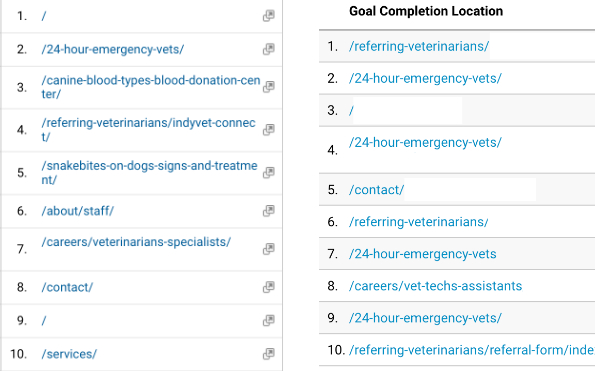
Above are two snapshots from the Google Analytics of one of the largest animal hospitals in the country. On the left, you can see a rank of the top 10 pages for the website. The company has had success in getting two of their blog posts ranking #1 on Google, and it drives a lot of people to that page. However, on the right, you can see the pages that drive the most conversions (phone calls, emails, form fills, etc.) for the company.
Neither blog page drives meaningful conversions, and thus revenue, for them.
So while it may be nice, and it may answer questions that people have if someone is in real need of an emergency veterinarian, they will not look very deep into the website. They just want a phone number to call.

Remember KISS
If you’ve ever been in sales, you’ve probably heard of KISS. It stands for “Keep It Simple, Stupid,” and that’s what successful businesses do. Think of GEICO. It’s an acronym for “Government Employees Insurance Company.” Not so simple, so they made it an acronym and have said basically the same line for the past 25 years to become one of the largest insurance companies in the world.
A small business needs to think of one or two main messages that they repeat again and again. From how they answer the phones to the email surveys, the message is always reinforced. Once you have your message, your advertising needs to reach a large number of your target audience, preferably at a time when they might be interesting in learning more about what you do.
It’s really that simple.